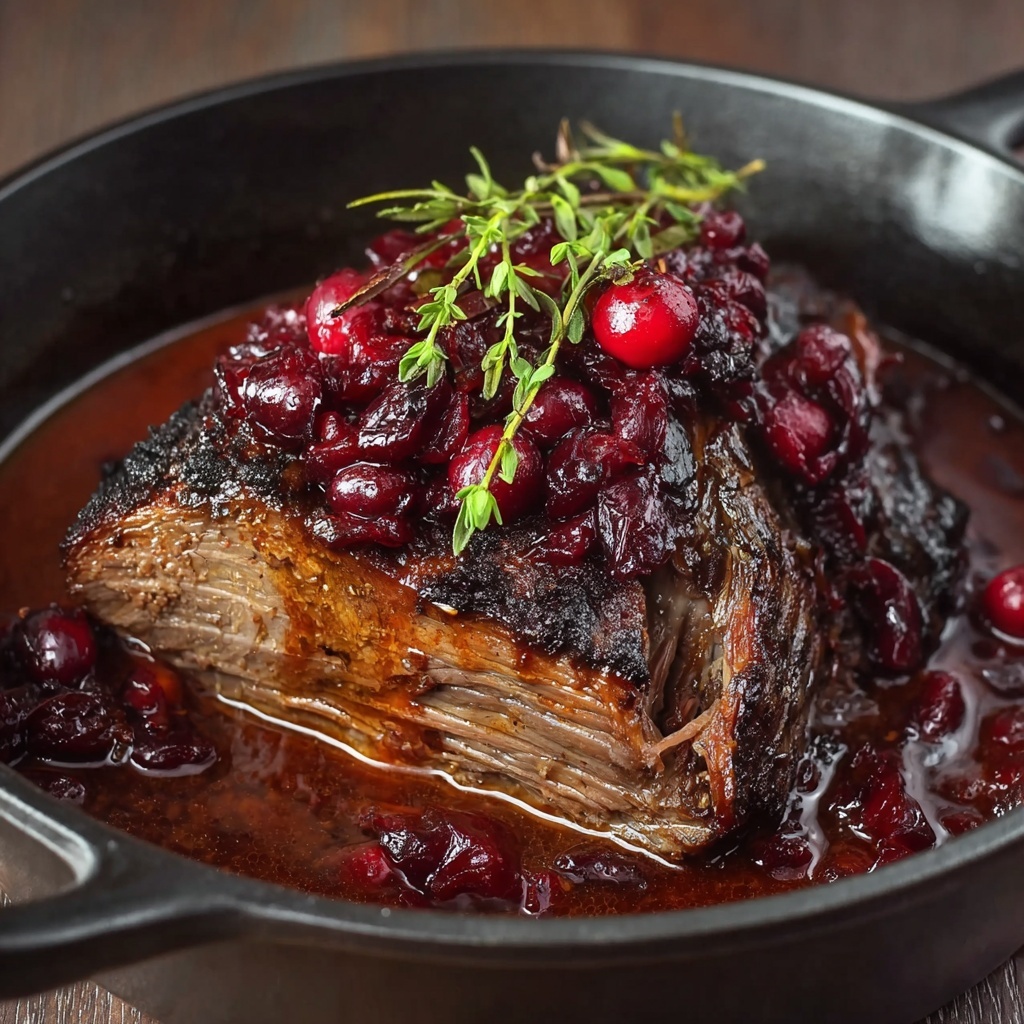
If you’re looking to wow your family and friends with a dish that’s bursting with flavor and elegance, look no further than this Savory Cranberry Balsamic Roast Beef Recipe. It perfectly marries the rich, juicy tenderness of ribeye roast with the bright, tangy pop of cranberries and the deep complexity of balsamic vinegar. Whether it’s a holiday feast or a special Sunday dinner, this recipe guarantees an unforgettable main course that’ll have everyone asking for seconds and the secret behind that luscious sauce.
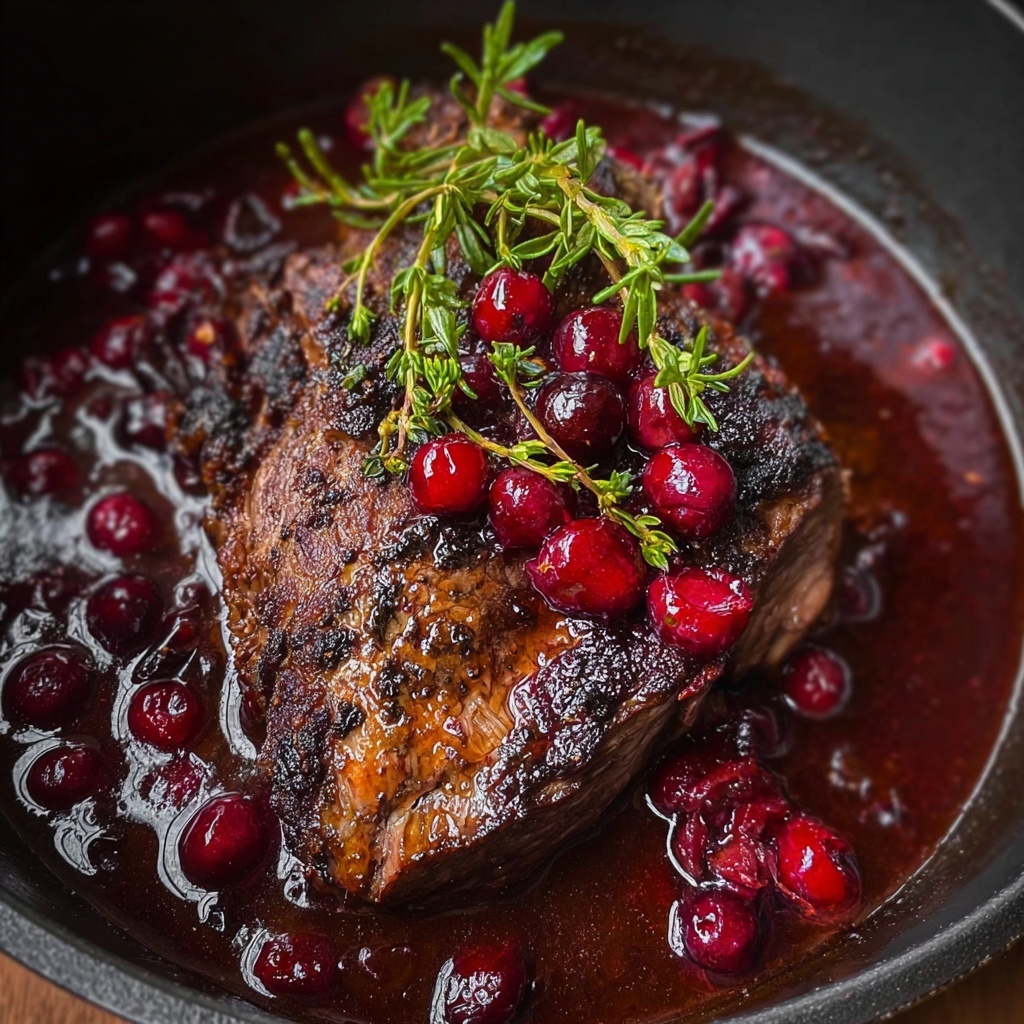
Ingredients You’ll Need
The beauty of this Savory Cranberry Balsamic Roast Beef Recipe lies in its straightforward, quality ingredients that come together harmoniously. Each component plays a crucial role—from tenderizing and flavoring the meat to creating a vibrant, mouthwatering sauce with balanced sweetness and spice.
- 3 to 5 pounds ribeye roast: Chosen for its marbling, which ensures succulent tenderness and rich flavor.
- Salt to taste: Essential to enhance the beef’s natural taste and bring out all layered flavors.
- 1/2 cup balsamic vinegar: Adds a tangy richness that deepens the complexity of the roast.
- 2 cloves garlic (minced): Provides aromatic depth and a savory backbone.
- 1/4 cup cranberry sauce: Brings a delightful sweet-tart twist that brightens the dish.
- 2 tablespoons brown sugar: Balances acidity with subtle caramel notes for a perfect glaze.
- 1 teaspoon red pepper flakes: Introduces gentle heat for an exciting kick without overpowering.
- 2 tablespoons olive oil: For marinating, helping flavors penetrate the meat and keeping it moist.
- 2 tablespoons vegetable oil: Used for searing, creating a beautiful, flavorful crust.
- 1/2 cup beef broth: Keeps the roast juicy and forms the base of the luscious sauce.
- 2 cups cranberries (fresh or frozen): Adds fresh color and bursts of flavor during roasting.
- 6 sprigs thyme (fresh): Infuses herbal notes that complement both the beef and the fruit elements.
How to Make Savory Cranberry Balsamic Roast Beef Recipe
Step 1: Prepare the Marinade
Begin by mixing balsamic vinegar, minced garlic, cranberry sauce, brown sugar, red pepper flakes, salt, and olive oil in a large resealable bag. This marinade is your flavor powerhouse, balancing sweet, tangy, spicy, and savory notes to infuse the beef beautifully. Give it a gentle shake until everything blends perfectly.
Step 2: Marinate the Ribeye
Using a sharp knife, pierce the ribeye roast all over to allow the marinade to penetrate deeply. Slip the roast into the bag with the marinade, seal tightly, and massage it gently so every inch is coated. Pop it in the fridge overnight, turning occasionally to ensure the meat soaks up every bit of that delicious goodness.
Step 3: Preheat Your Oven
Set your oven to 350°F (175°C) so it’s perfectly hot and ready once your beef is prepped for roasting. Having the oven ready to go means you can move seamlessly through the cooking process without delay.
Step 4: Sear the Roast
Take the ribeye out of the marinade and gently pat off excess moisture with a paper towel—this step is key to achieving a crisp, caramelized crust. Heat vegetable oil in a cast iron pan over medium heat, then sear the beef for about 3-5 minutes on each side until a golden brown crust forms. This seals in the juices and builds deep, savory flavor.
Step 5: Combine Sauce Ingredients and Roast
Pour the remaining marinade into the pan along with beef broth, stirring to combine. Add fresh cranberries and thyme sprigs before transferring the entire pan to the oven. Roast the beef for approximately 20 minutes per pound, or until a meat thermometer reads 140°F (60°C) for a perfect medium-rare that’s juicy and tender.
Step 6: Rest Before Serving
Once out of the oven, allow the roast to rest for 15 minutes. This crucial resting phase lets the juices redistribute evenly, ensuring every slice bursts with moisture and flavor, making your Savory Cranberry Balsamic Roast Beef Recipe truly unforgettable.
How to Serve Savory Cranberry Balsamic Roast Beef Recipe
Garnishes
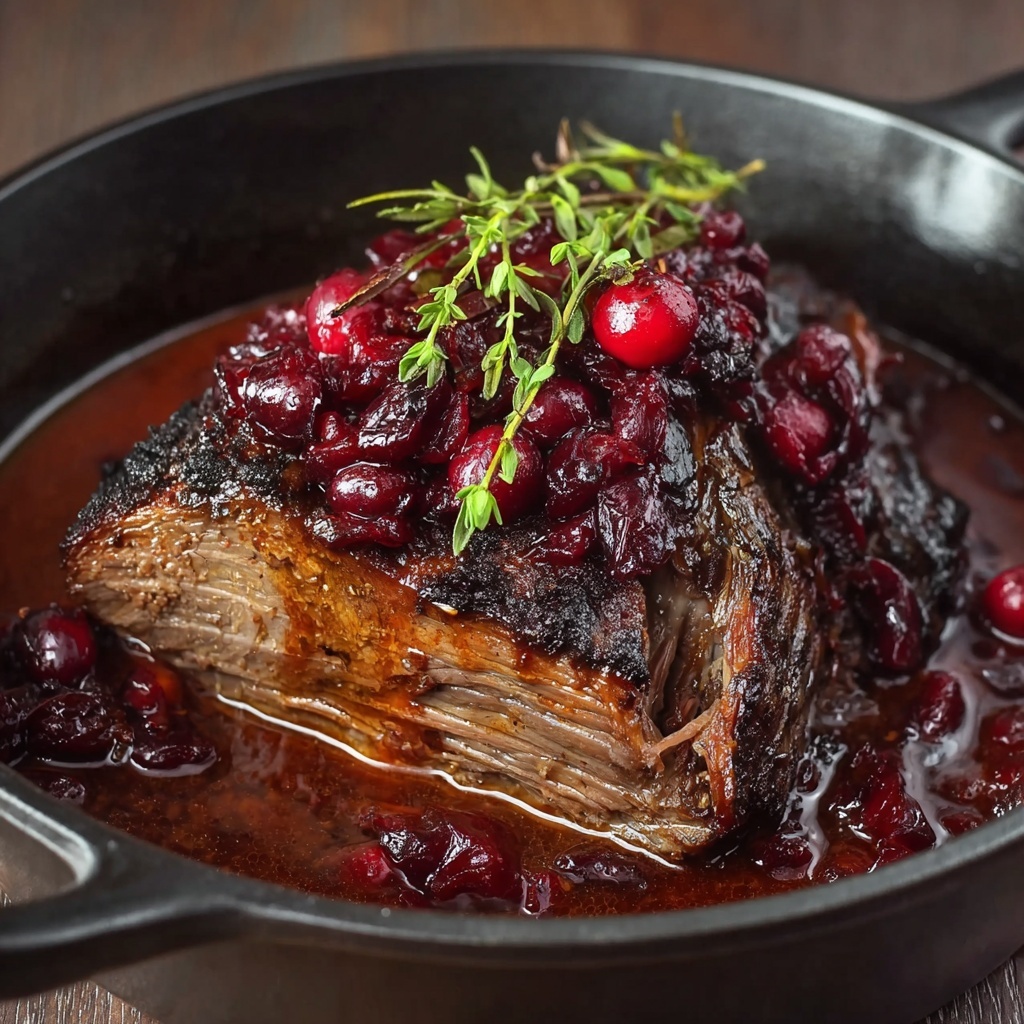
To elevate your presentation, garnish with additional fresh thyme sprigs and a few whole cranberries for a pop of vibrant color. A light drizzle of the pan juices over the sliced roast completes the dish, making it look as delectable as it tastes.
Side Dishes
This roast pairs beautifully with creamy mashed potatoes, roasted root vegetables, or a simple arugula salad tossed in a light vinaigrette. These sides complement the robust flavors without overshadowing the star of the meal.
Creative Ways to Present
For a festive touch, serve the beef on a wooden carving board surrounded by fresh herbs and cranberries. You can also slice the roast thinly and serve atop toasted baguette slices with a smear of horseradish cream for a sophisticated appetizer or buffet option.
Make Ahead and Storage
Storing Leftovers
Wrap your leftover roast beef tightly in foil or place it in an airtight container. Store it in the fridge and consume within 3 to 4 days to enjoy optimal freshness and flavor.
Freezing
If you want to save some for longer, slice and pack the roast in freezer-safe bags or containers, separating layers with parchment paper. It will keep well for up to 3 months without losing its delicious qualities.
Reheating
Gently reheat leftovers in a skillet over medium-low heat with a splash of beef broth to keep the meat moist, or warm in the oven wrapped in foil at 300°F (150°C) until heated through. Avoid microwave reheating where possible to preserve texture and flavor.
FAQs
Can I use a different cut of beef for this recipe?
Absolutely! While ribeye roast is ideal for its marbling and tenderness, you can use other cuts like sirloin or prime rib. Just adjust cooking times accordingly to achieve your preferred doneness.
Is it necessary to marinate the beef overnight?
Marinating overnight allows the flavors to deeply penetrate the meat, enhancing taste and tenderness. However, if short on time, even a few hours will impart good flavor, though overnight is recommended for best results.
Can I prepare this recipe without fresh cranberries?
If fresh cranberries aren’t available, frozen ones work just as well. They add the same burst of tartness and color. Make sure to add them frozen directly to the pan as instructed in the roasting step.
How do I know when the roast is perfectly cooked?
The best method is to use a meat thermometer. Aim for 140°F (60°C) for medium-rare, which results in a juicy, tender roast. Remember the roast will continue to cook slightly after being removed from the oven during resting.
What can I do with the pan juices after roasting?
The pan juices are packed with flavor! Use them as a sauce by simmering briefly to thicken, or drizzle them over your sliced roast and side dishes to add an extra layer of savory goodness.
Final Thoughts
This Savory Cranberry Balsamic Roast Beef Recipe is truly one of those dishes that brings warmth and excitement to any table. Its beautiful balance of flavors and festive appeal make it perfect for family gatherings or special occasions. Give it a try and watch it become your new go-to for unforgettable roast beef dinners!
Print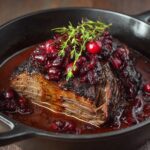
Savory Cranberry Balsamic Roast Beef Recipe
- Prep Time: 15 minutes plus overnight marinating (approximately 8 hours)
- Cook Time: 1 hour 20 minutes to 1 hour 40 minutes (depending on roast size, approx 20 minutes per pound)
- Total Time: 9 hours 35 minutes (including marinating and resting time)
- Yield: 6 servings
- Category: Main Course
- Method: Roasting
- Cuisine: American
Description
This Savory Cranberry Balsamic Roast Beef is a perfect centerpiece for family feasts, combining tender ribeye roast with a sweet-tart cranberry and balsamic marinade. Marinated overnight and seared to lock in flavors, then oven-roasted with fresh thyme and cranberries, it delivers a beautifully balanced dish with rich, tangy, and slightly spicy notes.
Ingredients
Beef and Marinade
- 3 to 5 pounds ribeye roast (well-marbled for tenderness and flavor)
- Salt to taste
- 1/2 cup balsamic vinegar
- 2 cloves garlic, minced
- 1/4 cup cranberry sauce
- 2 tablespoons brown sugar
- 1 teaspoon red pepper flakes
- 2 tablespoons olive oil
For Cooking
- 2 tablespoons vegetable oil (for searing)
- 1/2 cup beef broth
- 2 cups cranberries (fresh or frozen)
- 6 sprigs thyme (fresh)
Instructions
- Prepare the Marinade: In a large re-sealable food storage bag, combine balsamic vinegar, minced garlic, cranberry sauce, brown sugar, red pepper flakes, salt, and olive oil. Seal the bag and shake gently to mix all ingredients thoroughly.
- Marinate the Roast: Pierce the ribeye roast all over with a knife to allow better flavor absorption. Place the roast in the bag with the marinade, seal it, and massage the mixture into the meat. Refrigerate overnight, turning the bag occasionally for even marinating.
- Preheat the Oven: When ready to cook, preheat your oven to 350°F (175°C) to ensure it’s hot and prepared for roasting.
- Prepare the Roast for Cooking: Remove the roast from the marinade and gently wipe away excess marinade using paper towels to prevent burning during searing.
- Sear the Roast: Heat vegetable oil in a large cast iron pan over medium heat. Place the roast in the pan and sear each side for 3-5 minutes until a golden brown crust forms. This step locks in juices and enhances flavor.
- Add Liquids and Aromatics: Pour the leftover marinade back into the pan along with 1/2 cup of beef broth, stirring to combine. Toss in fresh cranberries and thyme sprigs to infuse additional flavor.
- Oven Roast the Beef: Transfer the pan to the preheated oven and roast for approximately 20 minutes per pound of meat, or until a meat thermometer inserted into the thickest part reads 140°F (60°C) for medium-rare doneness.
- Rest the Roast: Remove the roast from the oven and let it rest for 15 minutes. This allows the juices to redistribute throughout the meat, ensuring tender, juicy slices when carved.
Notes
- Marinating overnight significantly enhances the flavor and tenderness of the ribeye.
- Use fresh thyme and cranberries for the best aromatic and visual appeal, but frozen cranberries are a fine substitute.
- Adjust roasting time based on your preferred level of doneness; for medium, aim for 145°F (63°C).
- Letting the roast rest is crucial to prevent dry meat and retain juiciness.
- Use a meat thermometer to accurately gauge internal temperature for perfect doneness.