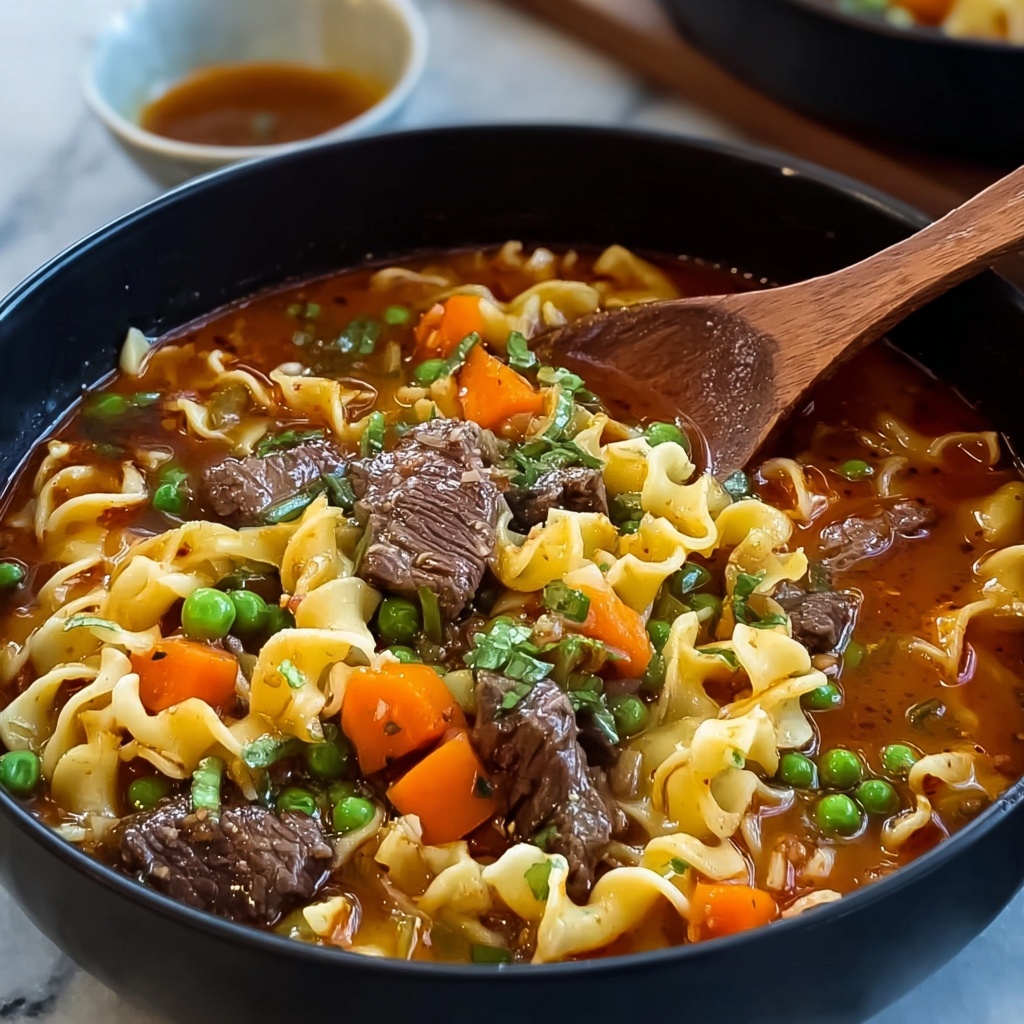
If you are craving comfort in a bowl, nothing hits the spot quite like this Vegetable Beef Noodle Soup Recipe. Imagine tender, savory chunks of beef mingling with a rainbow of wholesome vegetables and perfectly cooked noodles in a rich, flavorful broth. This soup is more than just a meal; it’s a heartfelt embrace on a chilly day, boasting a harmony of textures and aromas that will have you savoring every spoonful. Whether it’s a family dinner or a cozy solo feast, this Vegetable Beef Noodle Soup Recipe will quickly become a cherished favorite.
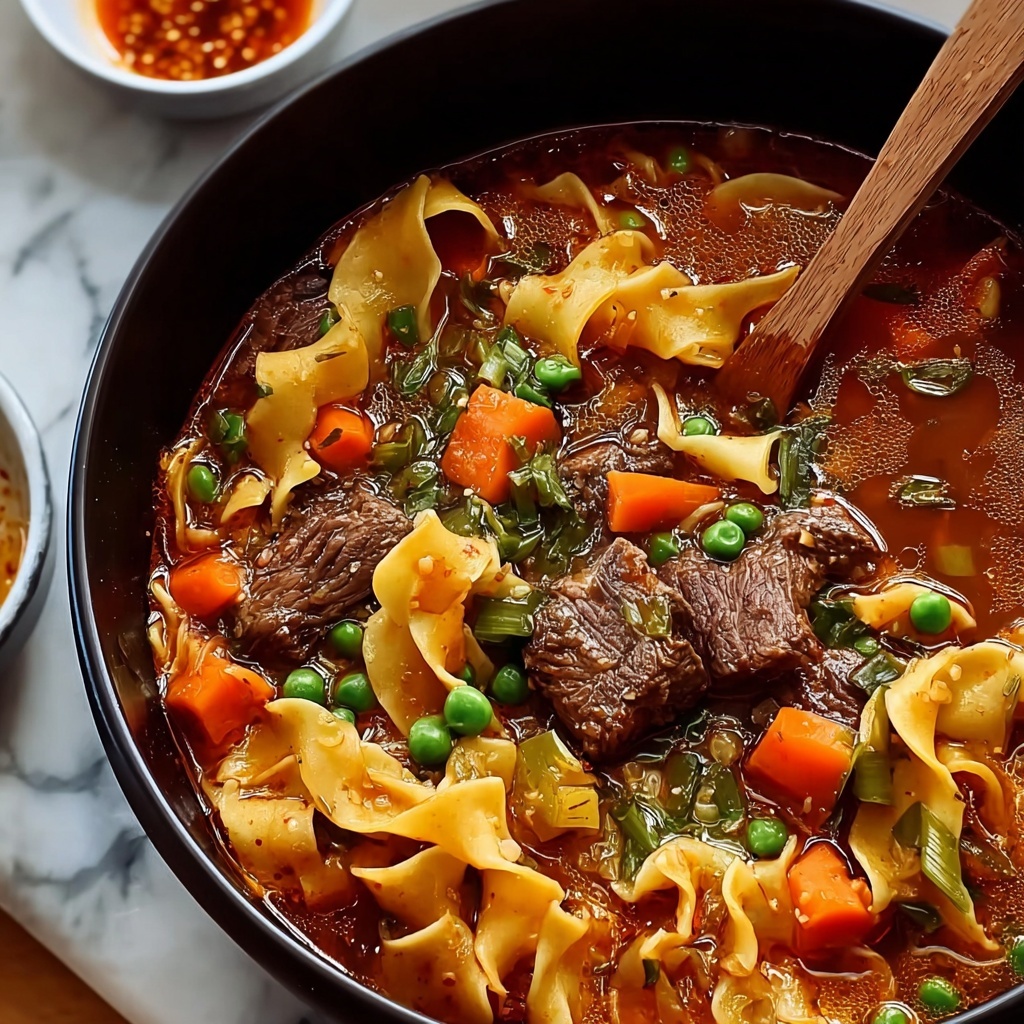
Ingredients You’ll Need
The secret to this Vegetable Beef Noodle Soup Recipe lies in its simplicity and the quality of its ingredients. Each one plays a crucial role — the beef brings hearty richness, the vegetables add freshness and color, and the herbs infuse the broth with inviting warmth. Together, they create an unforgettable soup experience.
- Beef stew meat (1 lb/450g): Choosing good quality stew meat ensures tender, juicy chunks after slow cooking.
- Olive oil (1 tablespoon): Adds a subtle fruity note and helps brown the beef to build flavor.
- Large onion (diced): Provides a sweet and savory base taste once sautéed.
- Garlic cloves (3, minced): Brings an aromatic punch that elevates the broth’s flavor.
- Carrots (3, peeled and sliced): Add natural sweetness and vibrant orange color.
- Celery stalks (3, sliced): Contribute a delicate crunch and a hint of earthiness.
- Potatoes (2, peeled and diced): Give the soup a comforting heartiness and creamy texture once cooked.
- Diced tomatoes (1 can, 14.5 oz): Introduce a slight acidity and depth to the broth.
- Beef broth (6 cups): Forms the rich, savory foundation of the soup.
- Water (2 cups): Helps balance the broth and volume of the soup.
- Dried thyme (1 teaspoon): Offers an earthy, slightly minty aroma that complements beef perfectly.
- Dried basil (1 teaspoon): Brings a sweet, herbal note to the mix.
- Dried oregano (1 teaspoon): Adds a peppery, aromatic layer.
- Salt and pepper (to taste): Essential seasonings to round out and enhance all other flavors.
- Frozen green beans (1 cup): Add fresh color and a gentle snap to the soup.
- Frozen corn (1 cup): Sweet kernels that brighten each spoonful.
- Frozen peas (1 cup): Tender bursts of sweetness and vibrant green hues.
- Egg noodles (2 cups) or your choice of pasta: Provide the comforting carb component that makes the soup truly satisfying.
- Fresh parsley (chopped, for garnish): A fresh, herbal finish that lifts the dish visually and flavor-wise.
How to Make Vegetable Beef Noodle Soup Recipe
Step 1: Brown the Beef
Start by heating olive oil in a large pot or Dutch oven over medium-high heat. Add the beef stew meat in batches if needed to avoid overcrowding, allowing it to brown on all sides. This caramelization locks in flavor and creates a deep base for your soup. Once browned, transfer the beef to a plate and set aside—resist the urge to skip this step, as it makes all the difference!
Step 2: Sauté the Vegetables
In the same pot, toss in the diced onion, sliced carrots, and celery. Cooking these until they soften gently releases their natural sweetness, which will complement the beef perfectly. After about 5 minutes, add minced garlic and cook just until fragrant. Garlic burns easily, so a quick minute is plenty to meld its aroma into the mix without bitterness.
Step 3: Add Broth and Seasonings
Return the browned beef to the pot, stirring it in with the softened vegetables. Pour in the canned diced tomatoes with their juice, the beef broth, and water. Sprinkle in dried thyme, basil, oregano, and season with salt and pepper. Give it a good stir to combine all those wonderful flavors, and bring the mixture to a gentle boil. This step kickstarts the melding of herbs and heartiness in your soup base.
Step 4: Simmer the Soup
Reduce the heat to low and cover the pot. Let your soup simmer patiently for around 45 minutes. This simmering time tenderizes the beef and allows flavors to intermingle deeply. You’ll notice the broth turning richer, punctuated by the subtle aromas of herbs and beef that promise a delicious meal ahead.
Step 5: Add Potatoes and Frozen Vegetables
Next, add the diced potatoes along with the frozen green beans, corn, and peas. Simmer uncovered for another 15 to 20 minutes until the potatoes are fork-tender and vegetables are heated through. This final simmer brings a delightful mixture of textures and bursts of sweetness that make this soup so nourishing.
Step 6: Cook the Noodles
While the soup finishes cooking, boil your egg noodles or preferred pasta according to package instructions until al dente. Drain them well. Cooking the noodles separately keeps them from becoming mushy in the soup and ensures every bite has a perfect texture.
Step 7: Combine and Serve
Stir the cooked noodles directly into the simmering soup to marry all the components. Taste and adjust with extra salt or pepper if needed. Ladle the steaming soup into bowls, sprinkle generously with fresh chopped parsley, and serve immediately. This final touch gives you a vibrant splash of green and an herbaceous brightness that makes your Vegetable Beef Noodle Soup Recipe truly shine.
How to Serve Vegetable Beef Noodle Soup Recipe
Garnishes
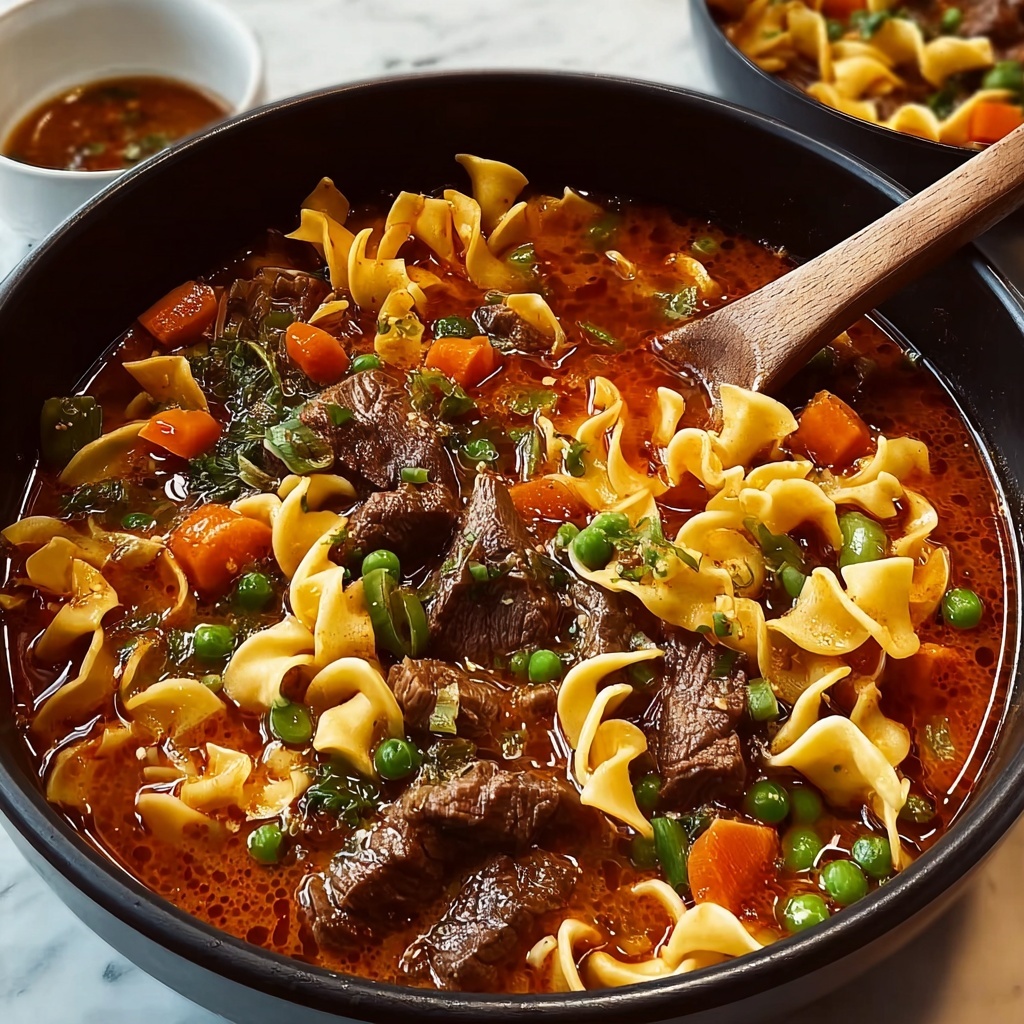
Fresh chopped parsley is a classic garnish that brightens the robust soup with its subtle peppery flavor. For an extra cozy touch, add a sprinkle of grated Parmesan or a dollop of sour cream. A squeeze of lemon juice can also cut through the richness and add a tangy freshness, making each spoonful pop.
Side Dishes
Serve this Vegetable Beef Noodle Soup Recipe alongside a crusty artisan bread or soft dinner rolls to soak up that luscious broth. A simple green salad with vinaigrette adds a crisp counterpoint that balances the hearty soup perfectly. For a heartier meal, roasted root vegetables or a baked potato complement the soup’s rustic flavors beautifully.
Creative Ways to Present
For a homey, inviting look, serve the soup in rustic bowls with big soup spoons and linen napkins to create a warm table setting. You could also serve it in mini soup crocks as an appetizer at gatherings. Another fun idea is to ladle the soup over a toasted open-faced sandwich for a cozy, nostalgic twist that’s sure to impress.
Make Ahead and Storage
Storing Leftovers
You can store leftover Vegetable Beef Noodle Soup Recipe in airtight containers in the refrigerator for up to 3 days. The flavors actually deepen overnight, making it even more delicious the next day. Just remember to keep the noodles separate if possible and add them fresh when reheating to avoid sogginess.
Freezing
This soup freezes wonderfully for up to 3 months. Freeze the beef and vegetable broth base without the noodles for best results. When ready to enjoy, thaw overnight in the refrigerator before reheating and stirring in freshly cooked noodles. This method keeps the noodles from turning mushy and the soup tasting fresh.
Reheating
Reheat your Vegetable Beef Noodle Soup Recipe gently on the stovetop over medium-low heat, stirring occasionally to ensure even warming. If the soup has thickened, add a splash of water or broth to loosen it. Avoid boiling after adding noodles to keep their texture just right. Reheat only the amount you plan to eat for the best experience.
FAQs
Can I use other meats in this Vegetable Beef Noodle Soup Recipe?
Absolutely! While beef stew meat gives a rich flavor and tender texture, you can substitute with diced chicken or turkey for a lighter version. Just adjust cooking times since poultry cooks faster than beef.
What kind of noodles work best in this soup?
Egg noodles are classic and absorb the broth nicely without falling apart. However, any pasta like small shells, rotini, or even broken spaghetti can work well, depending on your preference.
Can I make this soup in a slow cooker?
Yes! Brown the beef and sauté the vegetables as directed, then transfer everything to a slow cooker. Cook on low for 6-8 hours or high for 3-4 hours, adding the noodles near the last 30 minutes so they don’t overcook.
Is it possible to make this soup gluten-free?
Definitely! Just swap regular egg noodles for gluten-free pasta or use rice noodles. Also, double-check your beef broth to ensure it’s gluten-free. The rest of the ingredients are naturally gluten-free.
How can I add more vegetables to the soup?
Feel free to toss in extra vegetables like zucchini, bell peppers, or spinach. Add softer vegetables towards the end of cooking to prevent them from becoming mushy, ensuring each bite remains fresh and vibrant.
Final Thoughts
This Vegetable Beef Noodle Soup Recipe is a tapestry of comforting flavors that everyone will love. It’s simple enough for a weeknight dinner but special enough to share with friends and family. Once you try this recipe, its warm, hearty goodness will invite you back again and again. So grab your pot, gather the ingredients, and dive into a bowl of cozy deliciousness today!
Print
Vegetable Beef Noodle Soup Recipe
- Prep Time: 20 minutes
- Cook Time: 1 hour 5 minutes
- Total Time: 1 hour 25 minutes
- Yield: 6 servings
- Category: Soup
- Method: Stovetop
- Cuisine: American
Description
A hearty and comforting Vegetable Beef Noodle Soup featuring tender beef stew meat simmered with fresh vegetables, flavorful herbs, and tender egg noodles. Perfect for a nourishing meal any day of the week.
Ingredients
Meat and Oil
- 1 lb (450g) beef stew meat, cut into small pieces
- 1 tablespoon olive oil
Vegetables and Aromatics
- 1 large onion, diced
- 3 cloves garlic, minced
- 3 carrots, peeled and sliced
- 3 celery stalks, sliced
- 2 potatoes, peeled and diced
- 1 cup frozen green beans
- 1 cup frozen corn
- 1 cup frozen peas
Liquids and Canned Goods
- 1 can (14.5 oz) diced tomatoes
- 6 cups beef broth
- 2 cups water
Seasonings
- 1 teaspoon dried thyme
- 1 teaspoon dried basil
- 1 teaspoon dried oregano
- Salt and pepper to taste
Pasta
- 2 cups egg noodles or any pasta of your choice
Garnish
- Fresh parsley, chopped
Instructions
- Brown the Beef: In a large pot or Dutch oven, heat the olive oil over medium-high heat. Add the beef stew meat and cook until browned on all sides. Remove the beef from the pot and set aside.
- Sauté the Vegetables: In the same pot, add the diced onion, carrots, and celery. Cook for about 5 minutes until the vegetables start to soften. Add the minced garlic and cook for another minute until fragrant.
- Add Broth and Seasonings: Return the browned beef to the pot. Add the diced tomatoes (with their juice), beef broth, water, dried thyme, dried basil, dried oregano, salt, and pepper. Stir to combine and bring the mixture to a boil.
- Simmer the Soup: Reduce heat to low and cover the pot. Let the soup simmer for about 45 minutes, until the beef is tender and the flavors have melded together.
- Add Potatoes and Frozen Vegetables: Add the diced potatoes, green beans, corn, and peas to the pot. Continue to simmer for another 15-20 minutes until the potatoes are tender.
- Cook the Noodles: In a separate pot, cook the egg noodles or pasta according to package instructions. Drain the noodles and set aside.
- Combine and Serve: Add the cooked noodles to the soup and stir to combine. Taste and adjust seasoning with salt and pepper as needed. Ladle into bowls and garnish with chopped fresh parsley.
Notes
- Beef can be substituted with chicken or turkey for a lighter version.
- Use gluten-free pasta if you need the recipe to be gluten-free.
- For thicker soup, add less water or simmer uncovered for the last 10 minutes.
- The soup tastes even better the next day as flavors continue to blend.
- Frozen vegetables are convenient and retain most nutrients, but fresh vegetables can also be used.